The 40-yard roll-off measures about 22 feet long, 8 feet wide, and 8 feet high, giving roughly 40 cubic yards of capacity - the equivalent of about 16 pickup-truck loads. That footprint matters: a 40-yard needs a flat,…
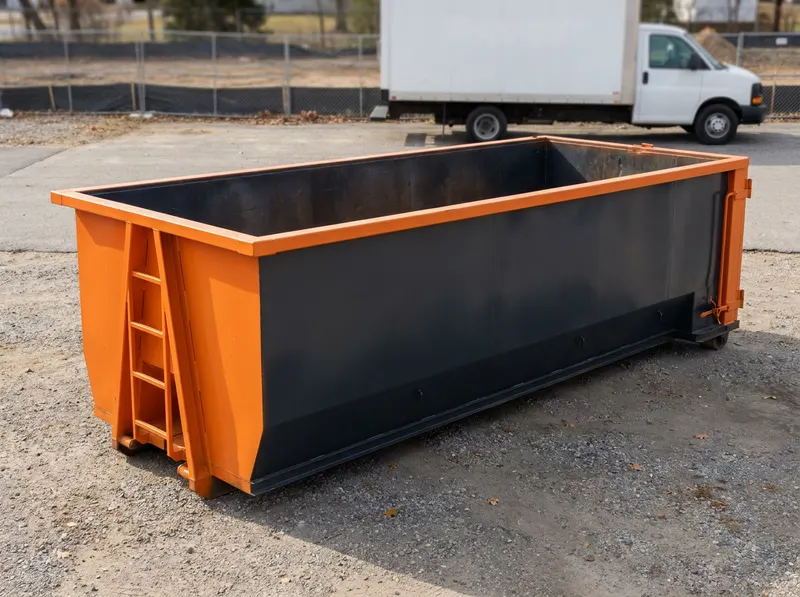
The 40-yard roll-off measures about 22 feet long, 8 feet wide, and 8 feet high, giving roughly 40 cubic yards of capacity - the equivalent of about 16 pickup-truck loads. That footprint matters: a 40-yard needs a flat, open run of driveway or lot at least 60 feet long for the delivery truck to set it down and later tilt it up for pickup. On the tighter streets of Germantown and the shotgun-house blocks of Portland, that clearance is often the deciding factor, so measuring the drive before delivery prevents a wasted trip.
The 40-yard fits large-volume, lighter-density jobs best.
Step 1, picture the debris: a full-house interior gut in the Highlands, a multi-unit cleanout in St. Matthews, or a commercial tenant turnover near Shively fills a 40-yard without hitting a weight problem. Step 2, weigh the material - for dense loads like concrete, brick, dirt, or roofing tear-offs, a smaller 20-yard or 30-yard is the better pick because heavy debris reaches legal transport weight long before the box is full.
The trade-off is simple: the 40-yard buys maximum volume, while a 30-yard buys an easier fit on a short Crescent Hill or Clifton driveway. For a single-room cleanout in Fern Creek, the 10-yard at $595 does the job; for a roof tear-off in Okolona, a 20-yard at $695 handles the weight; the 40-yard at $895 is for high-volume demolition and estate-sized clearouts.
Flat pricing means the $895 covers delivery, the rental period, pickup, and dump fees in one number. Many roll-off quotes nationwide exclude the landfill municipal solid waste landfill tonnage fee, which can add hundreds to the real total - the Trailblazer Dumpster Rental price does not.
Prohibited items follow standard waste rules: no household hazardous waste such as solvents or oil, no lead-bearing hazards, no appliances with refrigerant, no tires, and no liquids. Those items route to a Louisville Metro Public Works program or a Kentucky-permitted facility instead; the state's rules sit with the Kentucky Division of Waste Management. Recyclable metal, cardboard, and clean wood can often be diverted - Earth911 lists local drop-off points by material.
A roll-off dumpster rental is not junk removal: the crew drops the container and the customer loads it, which is why the flat rate stays low.
Contractors managing demolition should keep the loading zone clear and follow OSHA jobsite disposal" rules for how debris is handled on site. If the dumpster must sit on a public street in a dense corridor like Bardstown Road near the Highlands rather than private property, a right-of-way permit through Develop Louisville may be required before placement. For larger construction waste-stream planning, the National Association of Home Builders publishes guidance on managing construction and demolition debris.
Every job gets a firm, written price after an on-site visit.
Tell us about your 40-yard dumpster job in Louisville and we'll send a clear, written quote, usually the same day.
 Trailblazer Dumpster Rental